
Crafting Your Marketing Action Plan
Understanding the Importance of a Marketing Action Plan
A marketing action plan is not just a document; it is the roadmap that guides your business toward achieving its marketing objectives. It outlines the strategies, tactics, and activities necessary to reach your target audience and convert them into loyal customers. Having a structured plan ensures that every effort aligns with your overall business goals, making your marketing initiatives more effective and efficient.
Without a marketing action plan, businesses often find themselves struggling with disjointed efforts, wasted resources, and inconsistent messaging. A well-thought-out plan helps in coordinating various marketing activities, ensuring that every campaign, promotion, or advertisement works in harmony towards the same end. This integrated approach not only maximizes the return on investment (ROI) but also builds a stronger brand presence in the market.
Moreover, a marketing action plan provides a clear framework for measuring success. By setting specific objectives and key performance indicators (KPIs), you can track progress and make data-driven decisions. This continuous process of evaluation and adjustment helps in refining strategies, improving outcomes, and staying ahead of the competition. In short, a marketing action plan is a vital tool for any business aiming for sustainable growth and success.
Key Components of an Effective Marketing Action Plan
An effective marketing action plan comprises several key components that work together to achieve your marketing goals. These components include a thorough market analysis, clear objectives, detailed strategies and tactics, a defined target audience, and measurable outcomes. Each element plays a crucial role in shaping a comprehensive and actionable plan that drives results.
The first component is a detailed market analysis. This involves researching your industry, competitors, and market trends to gain insights into the current landscape. Understanding the market dynamics helps in identifying opportunities and threats, enabling you to position your brand effectively. It also aids in recognizing gaps in the market that your business can fill, giving you a competitive edge.
Another critical component is setting clear and achievable objectives. These objectives should be specific, measurable, attainable, relevant, and time-bound (SMART). Having well-defined goals provides direction and focus, ensuring that all marketing efforts are aligned with the desired outcomes. Additionally, a good marketing action plan includes a mix of strategies and tactics tailored to your target audience. This combination of high-level strategies and actionable steps ensures that your marketing activities are coherent and impactful.
Let us help you with your M.A.P.
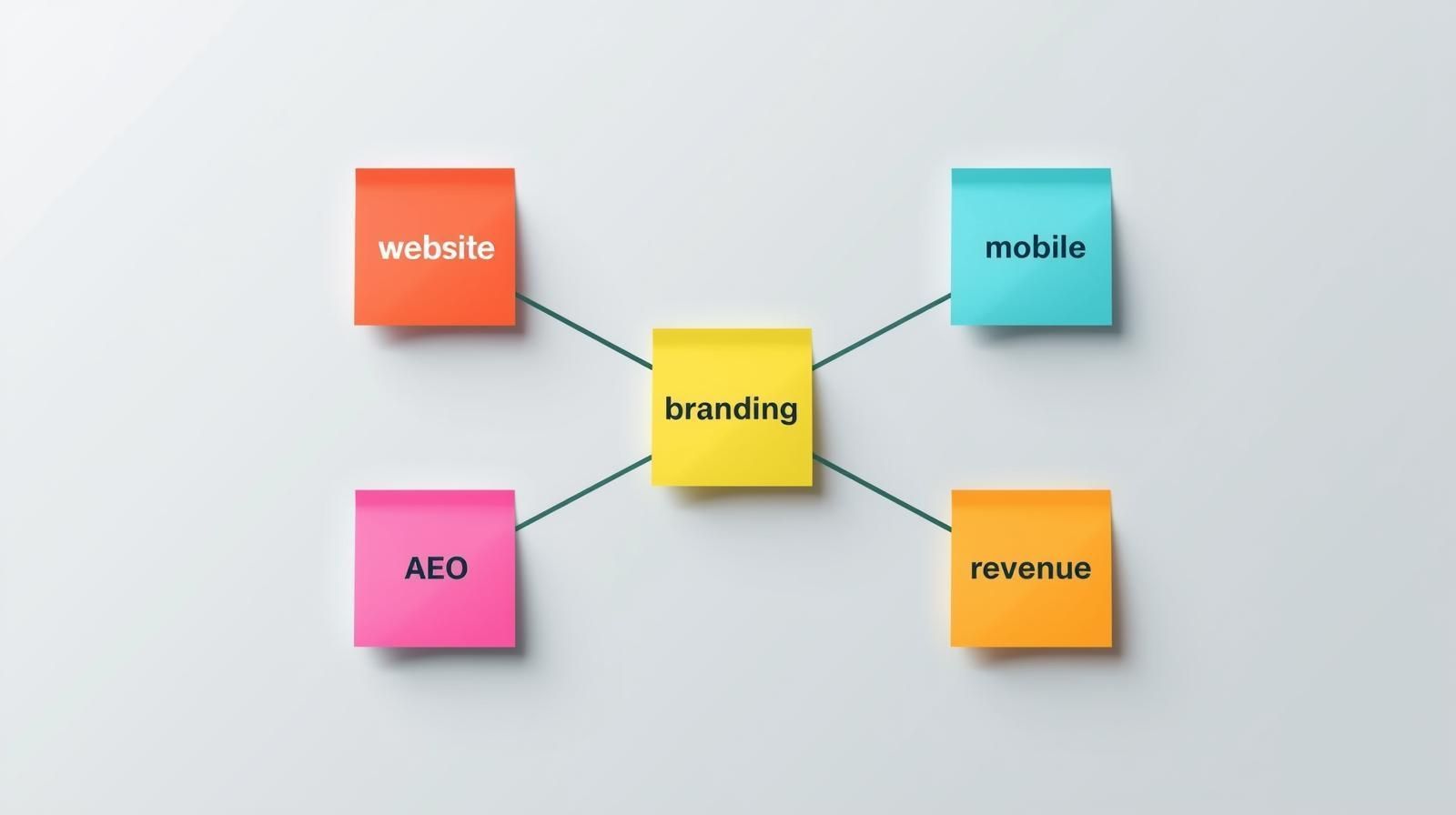
Lets cut to the chase. For $59, we will craft a custom M.AP. for your organization. It will include insights into your website, branding, engagement, SEO/AEO, your competition, and recommendations that you can make.
Text "MAP" to 662-337-8305 to get started.
Setting SMART Goals for Your Marketing Strategy
Setting SMART goals is a fundamental step in crafting an effective marketing action plan. SMART stands for Specific, Measurable, Attainable, Relevant, and Time-bound. These criteria help in creating clear and realistic objectives that provide a solid foundation for your marketing efforts.
Specific goals are well-defined and unambiguous. Instead of setting a vague objective like "increase sales," a specific goal would be "increase online sales by 20% in the next six months." This clarity helps in focusing efforts and resources on a particular target, making it easier to plan and execute strategies.
Measurable goals include criteria for tracking progress and assessing success. By having quantifiable metrics, you can monitor performance and make necessary adjustments. For example, if your goal is to "generate 500 new leads per month," you can measure the actual leads generated against this benchmark to evaluate the effectiveness of your marketing tactics.
Attainable goals are realistic and achievable within your resources and constraints. While ambitious goals can be motivating, setting unattainable targets can lead to frustration and demotivation. It's essential to balance ambition with practicality, ensuring that your goals are challenging yet feasible. Relevant goals align with your overall business objectives, ensuring that every marketing effort contributes to the bigger picture. Lastly, time-bound goals have a specific timeframe, providing a sense of urgency and helping in prioritizing tasks. By setting deadlines, you can maintain momentum and ensure timely execution of your marketing plans.
Conducting Market Research and Analysis
Market research and analysis are pivotal in developing an effective marketing action plan. This process involves gathering and analyzing data about your industry, competitors, and target audience to inform your marketing strategies. By understanding the market landscape, you can make informed decisions and tailor your approach to meet the needs and preferences of your customers.
The first step in market research is to define your research objectives. Determine what information you need and how it will be used to support your marketing goals. This could include insights into consumer behavior, market trends, competitive analysis, and more. Once you have a clear understanding of your research objectives, you can choose the appropriate methods for data collection, such as surveys, interviews, focus groups, or secondary research.
Analyzing the collected data is crucial for extracting meaningful insights. Look for patterns, trends, and correlations that can inform your marketing strategies. For example, if your research reveals that your target audience prefers online shopping over in-store purchases, you can focus your efforts on enhancing your e-commerce platform. Additionally, competitive analysis helps in identifying your competitors' strengths and weaknesses, allowing you to differentiate your brand and capitalize on market opportunities. By conducting thorough market research and analysis, you can develop a data-driven marketing action plan that addresses the needs of your customers and positions your business for success.
All this for $59? That is crazy!
For $59, we will craft a custom M.AP. for your organization. It will include insights into your website, branding, engagement, SEO/AEO, your competition, and recommendations that you can make.
Text "MAP" to 662-337-8305 to get started.
Identifying Your Target Audience
Identifying your target audience is a critical step in crafting an effective marketing action plan. Your target audience comprises the specific group of consumers who are most likely to be interested in your products or services. Understanding who they are, what they need, and how they behave enables you to tailor your marketing efforts to resonate with them and drive engagement.
The first step in identifying your target audience is to create detailed buyer personas. Buyer personas are fictional representations of your ideal customers, based on real data and insights. They include demographic information, such as age, gender, income, and education, as well as psychographic details, such as interests, values, and lifestyle. By creating comprehensive buyer personas, you can gain a deeper understanding of your audience's motivations, pain points, and purchasing behavior.
Segmentation is another important aspect of identifying your target audience. Segmentation involves dividing the broader market into smaller, more manageable segments based on specific criteria, such as demographics, behavior, or needs. This allows you to tailor your marketing messages and strategies to each segment, ensuring that your efforts are relevant and impactful. For example, if you offer a range of products catering to different age groups, you can create targeted campaigns for each age segment, addressing their unique preferences and needs. By identifying and understanding your target audience, you can create personalized and effective marketing strategies that drive engagement and conversions.
Developing Your Unique Selling Proposition (USP)
Your Unique Selling Proposition (USP) is the distinct feature or benefit that sets your product or service apart from the competition. It is the compelling reason why customers should choose your brand over others. Developing a strong USP is essential for differentiating your business and creating a memorable and persuasive marketing message.
To develop your USP, start by analyzing your competitors and identifying what makes your product or service unique. Look for gaps in the market that your offering can fill and consider the specific benefits that your customers value most. Your USP should highlight these unique attributes and clearly communicate the value that your product or service provides.
Once you have identified your USP, it is important to integrate it into all aspects of your marketing strategy. Your USP should be prominently featured in your branding, messaging, and promotional materials. Consistently communicating your USP helps in building brand recognition and loyalty, as customers associate your brand with the unique benefits you offer. Additionally, your USP can serve as a guiding principle for your marketing efforts, ensuring that all activities align with your brand's unique value proposition. By developing and effectively communicating your USP, you can differentiate your brand and attract customers who resonate with your unique offering.
Choosing the Right Marketing Channels
Choosing the right marketing channels is crucial for reaching your target audience and achieving your marketing objectives. With a multitude of channels available, from traditional media to digital platforms, it is important to select the ones that align with your audience's preferences and behaviors. A well-rounded approach that leverages multiple channels can maximize your reach and impact.
Start by identifying the channels that your target audience frequents the most. This could include social media platforms, search engines, email, content marketing, and more. Understanding where your audience spends their time and how they consume information helps in choosing the most effective channels for your marketing efforts. For example, if your audience is highly active on Instagram, focusing on visual content and influencer collaborations on this platform can yield better results.
Another important consideration is the nature of your product or service. Different channels may be more suitable for different types of offerings. For instance, B2B companies may find LinkedIn to be a more effective platform for reaching decision-makers, while B2C companies may benefit from utilizing Facebook and Instagram for engaging with consumers. Additionally, it is essential to evaluate the strengths and weaknesses of each channel and how they align with your marketing goals. By choosing the right mix of marketing channels, you can create a cohesive and effective strategy that reaches your audience and drives engagement.
We can help you!
For $59, you get insights into your website, branding, engagement, SEO/AEO, your competition, and recommendations that you can make. Don't pass this up.